Late summer has a different feel than the start of the season. Dry weeks stack up, rain falls hard and fast between heatwaves, and grime seems to set in deeper with every passing day. When it comes to pressure washing for homes during August, it's not like doing the same job in May or June. The sun hangs a little heavier, and surfaces respond differently.
This time of year changes how we approach exterior cleaning. Everything from drying time to surface temperature needs extra thought, especially on materials like stone, brick, and concrete. Heat plays tricks with water and dirt, so being season-smart makes all the difference.
How Summer Heat Affects Exterior Surfaces
It doesn't take long in the August sun for surfaces to heat up. Patio slabs, driveway bricks, and even fascia boards can warm up fast, especially during midday hours when the sun is strongest. The challenge is that hot surfaces don't hold water long enough for it to work effectively.
- When water dries too fast, it can leave streaks and chalky residue behind
- Heat can cause cleaning solution to evaporate before it gets a chance to lift the dirt
- Sun-soaked areas often need to be rinsed more carefully to avoid patchy drying
Washing in the shade, or planning work for early mornings and late afternoons, often gives better results. It's easier to manage rinsing and helps prevent missed spots that show up once everything has dried.
Grime Build-Up and Sun-Dried Stains
By late summer, many surfaces have already been through pollen build-up in spring and the fine dust of dry July weeks. Add pet mess, garden splashes, and pollution from traffic, and the layers start to set. Getting them off isn't always quick, especially after days of sun baking them in.
- Algae and grime solidify in strong heat and need more pressure to lift
- Dust settles deep into textured brick or render and hangs on through dry spells
- Pollen, while light at first, mixes with rain and heat to become sticky over time
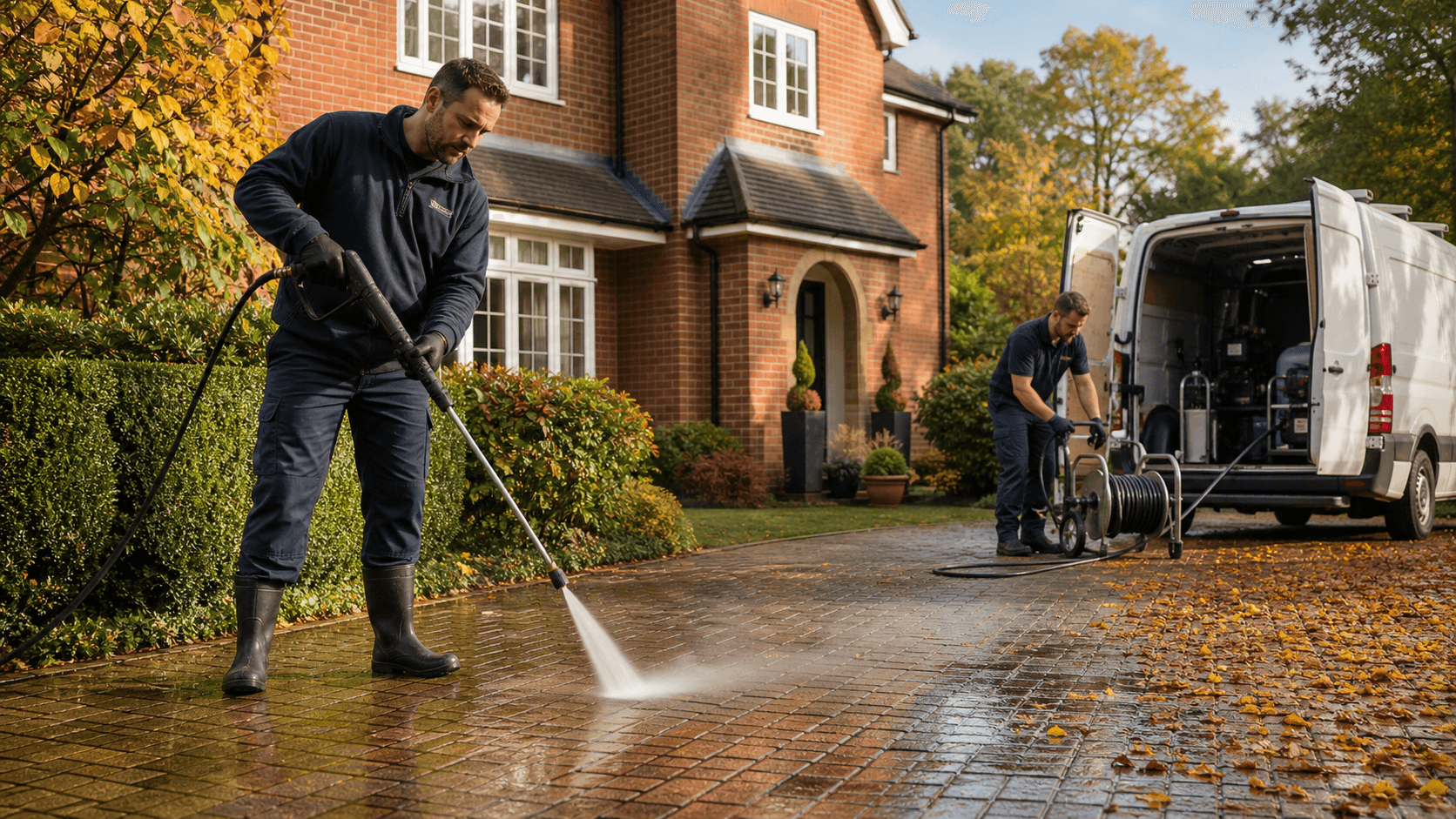
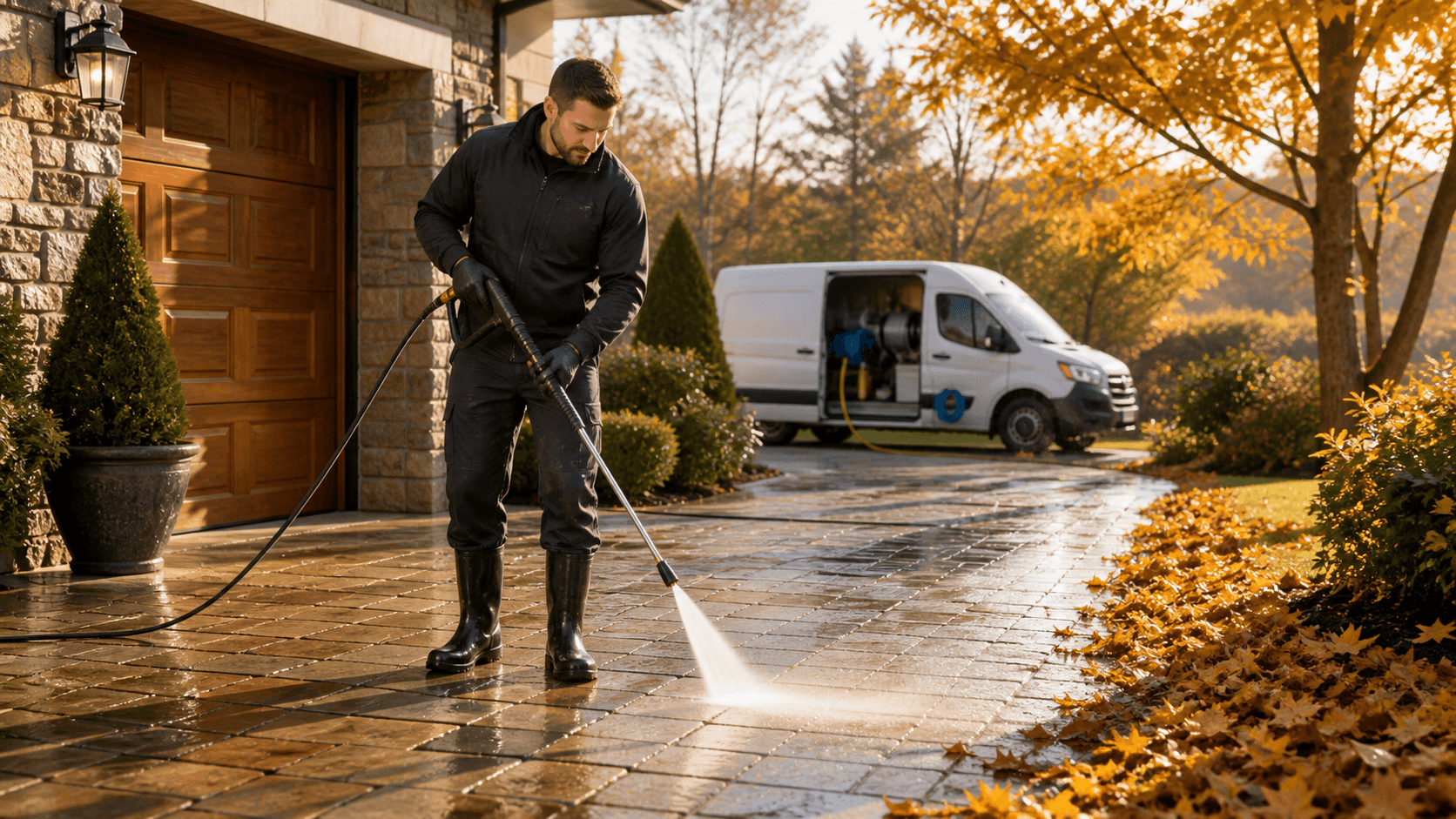
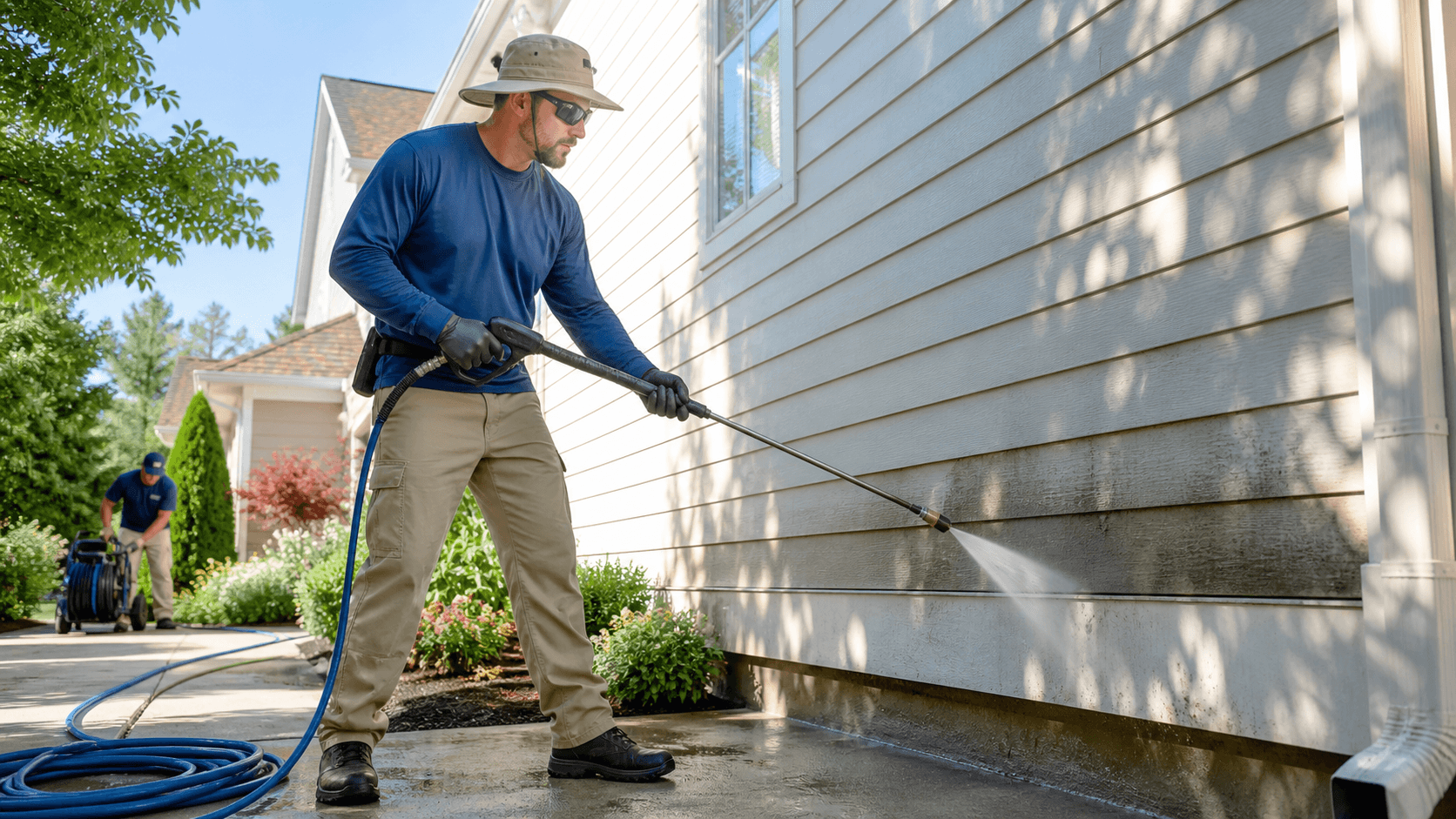
Williams Exterior Shine uses professional pressure washing equipment for patios, driveways, and exterior walls, pairing nozzle type and water pressure to each material. We always assess dirt type and surface condition, making sure sun-dried stains are lifted without damaging paint, render, or resin finishes.
Pressure washing in late summer usually takes a bit more effort than it would earlier in the season. That extra build-up means time spent where needed, focusing on the stubborn corners before they create permanent stains.
Water Usage and Drying Time During Warm Weather
Water behaves differently when it meets a surface that's already warm. It evaporates faster than many expect, especially off porous materials like brick and concrete. What looks like a clean finish can just be a fast-dried surface that still holds grime in deeper layers.
- Fast drying makes it harder to see if every bit was thoroughly cleaned
- Leftover soap spots can turn chalky if not rinsed in time
- Lines from overlapping spray paths become visible as the water disappears too soon
This is where slowing the pace helps. Rinsing small sections at a time gives better control, and revisiting patches that dried too fast helps avoid uneven results. Cleaning too quickly when it's hot often leads to more work when the marks show up later.
Spotting Wear and Damage Hidden in Summer Growth
By August, gardens have stretched out in every direction. Bushes lean in, grass creeps over drive edges, and decorative pots find permanent spots by back doors. All that summer growth can hide what's been going on underneath.
- Cracks in render or masonry can stay hidden behind long flower beds
- Blocked drains often go unnoticed until water starts pooling
- Algae or grime can form around garden edges where rainwater doesn't drain well
Pressure washing for homes at this point in the season often reveals more than just dirt. Once the surface is clear and the plant cover is pulled back, it's easier to catch signs of damage or wear that went unnoticed in the peak of summer. Early warning means quicker, simpler fixes instead of waiting for heavier rain in the coming months.
Your Williams Exterior Shine technician can point out cracks, spalling, or other trouble spots uncovered during a late-summer clean, helping you address small problems before autumn weather sets in.
Better Results with Season-Smart Cleaning
Cleaning during late summer brings its own kind of timing. The heat, the light, and the set-in stains all change how we work. With a few shifts in approach, though, we can still get surfaces looking sharp without making things harder than they have to be.
- Working during cooler times of day helps manage drying and rinsing effectively
- Paying attention to where the sun has been strongest helps avoid patchy results
- Giving built-up grime time to lift before rinsing avoids having to redo sections
The goal isn't to rush through or scrub harder. It's to adjust where needed and clean with the season in mind. That attention now saves effort later on, especially when cooler months arrive and surfaces start absorbing more moisture again.
Late summer gives us a final stretch of dry days to clean safely and spot what needs a bit of care. By slowing things down just enough and working with what the season gives us, we get results that last longer, look better, and take less follow-up. When we read the signs around us, cleaning becomes far easier to manage.
At Williams Exterior Shine, we understand how late summer weather can impact the effectiveness of cleaning your outdoor spaces. With higher temperatures and stubborn grime, it's important to tackle streaks from quick drying and hidden dirt before autumn arrives. Considering pressure washing for homes now helps keep your property looking its best. Give us a call and let's discuss how we can make a difference for your home.